Health Insurance Crisis 2026: ACA Subsidies Gone, Premiums Doubled — What Every American Must Do Right Now
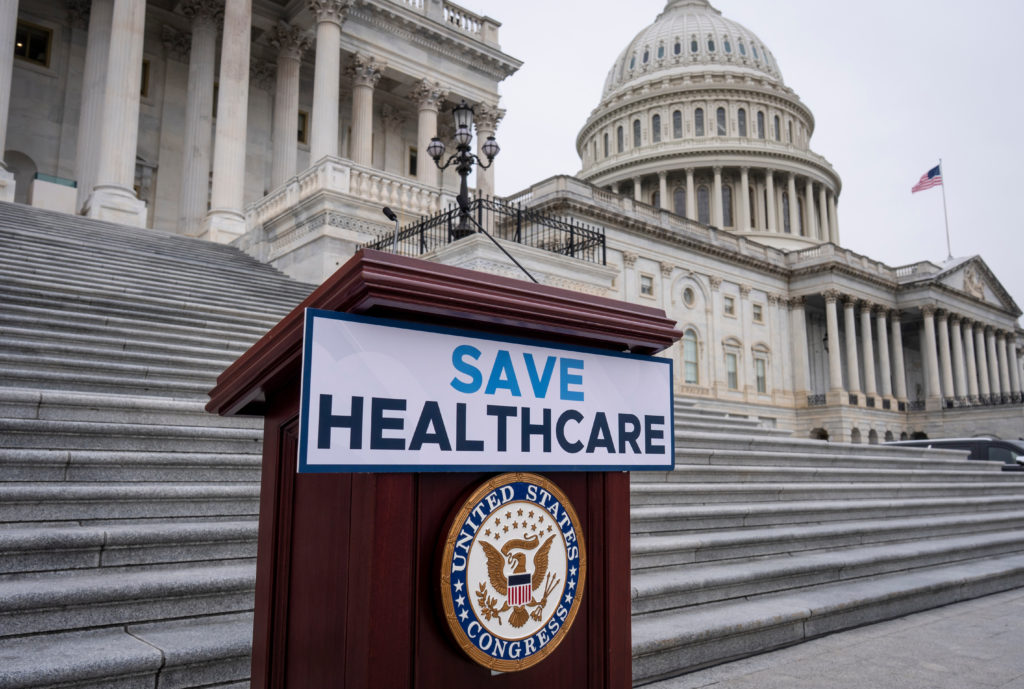
Health Insurance Crisis 2026: ACA Subsidies Are Gone, Premiums Have Doubled, and Here Is Exactly What Every American Needs to Do Right Now
If you buy your own health insurance — or if someone you love does — the beginning of 2026 has brought news that is genuinely alarming. The enhanced premium tax credits that made Affordable Care Act (ACA) marketplace health insurance affordable for more than 22 million Americans expired at midnight on December 31, 2025. Congress failed to extend them. The result is a health insurance catastrophe playing out in slow motion across every ZIP code in America: premiums that have more than doubled overnight for the average recipient, enrollment figures that have fallen sharply for the first time in years, and a growing legion of Americans — potentially 4.8 million by some expert estimates — who are expected to go completely uninsured in 2026 rather than pay prices they simply cannot afford. This is not a minor policy adjustment. This is the largest single-year deterioration in health insurance affordability that the United States has seen since before the Affordable Care Act itself was signed into law. For the self-employed, small business owners, farmers, ranchers, gig workers, early retirees, and anyone else who purchases coverage on the individual market, the ground has shifted beneath their feet. Understanding what happened, why it happened, who is most affected, and — critically — what concrete steps you can take to protect yourself and your family is now an urgent financial priority. This guide gives you the full picture.
The Big Picture: How Catastrophic Is the 2026 Health Insurance Situation?
The numbers are staggering in their scale and speed. Just one year ago, the average American receiving an enhanced premium tax credit paid roughly $888 per year — about $74 per month — for their ACA marketplace health insurance. In 2026, according to analysis by KFF, a nonpartisan health policy research organization, that same average recipient is paying approximately $1,904 per year, or about $159 per month. That is a 114% increase in out-of-pocket premium cost in a single policy year, for the same coverage. In dollar terms, the average subsidized household is absorbing an extra $1,016 in annual health insurance expenses — with zero change in their income, their health, or their coverage needs.
The raw enrollment data confirms what the math predicted. The Centers for Medicare and Medicaid Services reported that 22.8 million Americans enrolled in ACA marketplace coverage for 2026, down from a record 24.3 million in 2025. That represents roughly 1.5 million people who walked away from coverage entirely during open enrollment — and experts at the Urban Institute project the final tally of people who go uninsured due to the subsidy lapse could approach 4.8 million by the end of the year, as Americans who auto-renewed eventually face sticker shock and drop coverage mid-year. Another 2.5 million are expected to shift to other forms of coverage — employer plans, Medicaid, or bare-bones alternatives — leaving the ACA marketplace significantly smaller and, critically, concentrated with older, sicker enrollees who have no affordable alternative. That demographic concentration creates what economists call adverse selection, and it could trigger a premium spiral that makes 2026's numbers look mild in retrospect.
The politics behind this crisis are as important as the economics. The enhanced premium tax credits were first created in 2021 through the American Rescue Plan Act, extended through 2025 by the Inflation Reduction Act, and then allowed to expire when Congress — controlled by Republicans — declined to renew them. President Trump signed H.R. 1, also known as the "One Big Beautiful Bill," into law on July 4, 2025, a sweeping tax and spending package that also included more than $1 trillion in cuts to Medicaid and other federal health programs over the coming decade. Democrats repeatedly sought to extend the subsidies, and a 43-day government shutdown was triggered in part over the issue, but no extension materialized before the December 31 deadline. A family of four earning $45,000 per year that paid $0 in ACA premiums in 2025 could now owe as much as $1,600 per month for comparable coverage in 2026 — a cost that, for most working-class families, is simply impossible to absorb.
What Exactly Were the Enhanced ACA Subsidies — and Why Did They Matter So Much?
To understand the depth of the current crisis, it helps to understand what, specifically, was lost when the enhanced premium tax credits expired. The original ACA, signed by President Obama in 2010, created premium tax credits that reduced the cost of marketplace health insurance for Americans earning between 100% and 400% of the federal poverty line. This subsidy structure had a notorious design flaw: the so-called "subsidy cliff," which meant that a household earning even one dollar over 400% of the federal poverty line — approximately $62,600 for a single person in 2025 — received no financial assistance whatsoever, even if ACA premiums consumed an enormous share of their income.
The American Rescue Plan Act of 2021 fixed this cliff in two important ways. First, it eliminated the 400% FPL cutoff entirely, extending some level of subsidy eligibility to every American regardless of income, as long as their net premium cost would otherwise exceed 8.5% of their household income. Second, it dramatically increased the generosity of the subsidies across the board. The result was transformative: total ACA marketplace enrollment roughly doubled between 2021 and 2025, rising from approximately 12 million to more than 24 million. Millions of Americans who had previously been priced out of the individual market — particularly self-employed workers, small business owners, and adults aged 55 to 64 who are not yet eligible for Medicare — gained affordable access to comprehensive health coverage for the first time. The enhanced subsidies reduced average premium payments by more than 50% for marketplace enrollees, according to KFF.
Now, all of that financial protection is gone. The subsidy cliff is back. Americans earning above 400% of the federal poverty line are once again ineligible for any premium assistance. Silver-tier plans — the most popular type on the ACA marketplace — have hit a record average of $752 per month before subsidies in 2026, up 21% from the prior year. For a 55-year-old self-employed professional who was paying $200 per month with subsidies in 2025, the 2026 unsubsidized rate could easily exceed $900 per month. The math does not work for millions of Americans, and they are making the rational, if devastating, decision to go without.
State-by-State: Which Americans Are Getting Crushed Hardest in 2026?
The pain from the subsidy expiration is real in all 50 states, but it is not evenly distributed. The size of the premium increase you face in 2026 depends enormously on where you live, because individual state insurance markets vary widely in the number of competing carriers, the underlying cost of healthcare, and the degree to which insurers relied on the enhanced subsidies to price competitively. Here is the unvarnished regional reality.
- Arkansas: The Hardest-Hit State in the Nation
KFF projects that Arkansas residents will see the highest percentage increase in 2026 benchmark plan premiums of any state in the country — approximately 69%. This extraordinary jump reflects Arkansas's relatively thin insurer marketplace and high underlying healthcare costs. For context, a benchmark Silver plan in Arkansas that cost $450 per month in 2025 could rise to $760 or more in 2026 before any remaining subsidies are applied. Arkansas also declined to expand Medicaid under the ACA, leaving a significant population of low-income adults in the coverage gap with no affordable alternatives. The state's uninsured rate is expected to climb sharply in 2026. - Washington State: 41% Benchmark Increase
Washington state is projected to experience the second-highest premium jump of any state in 2026, with its benchmark Silver plan increasing by approximately 41%. This increase is partly driven by the loss of federal subsidy revenue that had allowed insurers to price competitively, and partly by rising underlying healthcare costs in a high-cost metropolitan market. Washington does have its own state-based marketplace (Washington Healthplanfinder) that offers some additional consumer tools, but those tools cannot substitute for the federal financial assistance that has now vanished. - Mississippi and Tennessee: 40% or More in Increases
Mississippi and Tennessee both face benchmark plan increases of 40% or higher, according to KFF projections. Mississippi is particularly concerning: it did not expand Medicaid, its insurance marketplace has limited insurer competition, and its rural population faces both higher healthcare costs and fewer coverage alternatives. About 200,000 Mississippians are expected to drop ACA coverage for 2026, according to reports — a catastrophic number for a state with already high rates of chronic disease and limited healthcare infrastructure. - Florida, Louisiana, Georgia, and the Deep South
States across the Southeast — many of which also chose not to expand Medicaid — are bracing for above-average premium increases alongside an exodus of marketplace enrollees. In these states, the double loss of enhanced subsidies and the Medicaid expansion gap leaves a broad swath of low- and moderate-income Americans with virtually no good options. Emergency rooms and safety-net hospitals in these states are already anticipating a surge in uncompensated care as the uninsured population grows. - States with Relatively Smaller Impacts: Alaska, New York, Vermont, and D.C.
At the other end of the spectrum, states like Alaska, New York, Vermont, and the District of Columbia are expected to see the smallest premium spikes in 2026. Alaska is the sole state where benchmark premiums are projected to actually decrease. These states generally feature more competitive insurer markets, state-specific subsidy programs that partially offset the federal loss, and stronger existing Medicaid programs that can absorb some displaced enrollees. However, "smaller impact" in this context still means significant increases — just not the 40–70% jumps seen in the hardest-hit markets. - California: High Costs and FAIR Plan Overflow
California's health insurance market faces compounding pressures in 2026. The state's Covered California marketplace has maintained stronger insurer participation than most, and California has its own state-funded subsidy program that extends some financial relief beyond the federal baseline. However, with federal enhanced subsidies gone, even California consumers are absorbing meaningful premium increases — and the state's already strained healthcare system faces additional pressure from the growing uninsured population.
The Medicaid Dimension: A Second Crisis Running Parallel
The loss of ACA enhanced subsidies does not exist in isolation. It runs alongside a second, slower-moving catastrophe: the more than $1 trillion in cuts to Medicaid and other federal health programs included in H.R. 1, signed into law on July 4, 2025. Medicaid currently covers more than 78 million Americans — more than any other single health insurance program in the country. The cuts embedded in H.R. 1 will phase in over a decade, but their early effects are already visible in state budget negotiations and Medicaid managed care contracting across the country.
The Congressional Budget Office estimates that the combination of the ACA subsidy expiration, the Medicaid cuts, and regulatory changes introduced by the Trump administration could result in approximately 12 million Americans losing health insurance by 2034. Independent analysts, including Professor Simon Haeder of Texas A&M University's School of Public Health, have put the total at potentially 17 million or higher when all the interacting policy changes are accounted for. To put that number in context: the United States had reduced the number of uninsured Americans from approximately 46.5 million in 2010 (when the ACA was signed) to about 25.3 million in 2023. The policy changes now underway could eliminate more than three-quarters of that 13-year progress in coverage expansion.
For Americans who were relying on Medicaid expansion to fill the gap left by unaffordable marketplace premiums, this creates a potentially impossible situation. In the 10 states that still have not expanded Medicaid — Alabama, Florida, Georgia, Kansas, Mississippi, South Carolina, Tennessee, Texas, Wisconsin, and Wyoming — people who earn too little to qualify for marketplace subsidies but too much to qualify for traditional Medicaid are caught in what is often called the "coverage gap." That gap is widening, not narrowing, in 2026.
The Ripple Effect: How the Health Insurance Crisis Is Reshaping American Life in 2026
The consequences of losing health insurance extend far beyond the monthly premium statement. When millions of Americans drop coverage, the financial and public health impacts reverberate throughout the entire economy. Hospitals and safety-net providers who treat uninsured patients cannot recover those costs — so they shift them to insured patients in the form of higher prices, which in turn drives up premiums for everyone who remains covered. This is the dynamic that economists fear most: a self-reinforcing death spiral in which rising premiums cause healthy people to drop coverage, which raises premiums further, which causes more people to drop coverage, and so on until the market collapses entirely.
The employment implications are also significant. The Commonwealth Fund estimated that the expiration of the enhanced ACA subsidies alone could cost nearly 340,000 American jobs in 2026, primarily in healthcare-adjacent industries and in small businesses whose employees relied on marketplace coverage. When people lose insurance and delay or forgo care, conditions that could have been caught early and treated cheaply become expensive emergencies. Productivity falls. Workers call out sick more. Employers absorb higher absenteeism costs. The financial multiplier of an uninsured population flows directly into reduced economic output — a cost that falls on every American, not just those without coverage.
The social equity dimension of this crisis also deserves direct acknowledgment. The premium spikes and coverage losses are not falling evenly across demographic lines. Older adults between 55 and 64 — too young for Medicare, too expensive to insure without subsidies — are being hit with some of the largest absolute premium increases of any age group, because health insurers are permitted to charge older adults up to three times more than younger enrollees. Self-employed workers and small business owners, who historically have had no employer-sponsored coverage to fall back on, are being squeezed from every direction simultaneously. Rural Americans in states without Medicaid expansion face the most extreme combination of high premiums, limited plan options, and scarce healthcare providers. And communities of color, who are statistically overrepresented among ACA marketplace enrollees and Medicaid beneficiaries, face disproportionate exposure to both the subsidy loss and the Medicaid cuts.
What Your Health Insurer and the Government Are Not Telling You: 5 Critical Facts for 2026
- A Special Enrollment Period May Still Be Available — But Only in Specific Circumstances
Most Americans believe that if they missed the January 15 open enrollment deadline, they are locked out of marketplace coverage for the rest of 2026. This is not entirely true. Qualifying life events — losing job-based coverage, getting married or divorced, having a baby, moving to a new coverage area, or experiencing certain income changes — trigger a Special Enrollment Period (SEP) that gives you 60 days to enroll in or switch marketplace plans outside the normal annual window. If your financial situation changes substantially in 2026, or if you lose coverage from another source, you may be entitled to enroll mid-year. Call the marketplace at 1-800-318-2596 or visit HealthCare.gov to determine your eligibility before assuming you are stuck until the next open enrollment period. - The Subsidy Cliff Is Back — and It Can Cost You Tens of Thousands of Dollars
One of the most dangerous features of the restored subsidy structure in 2026 is the return of the 400% federal poverty level cutoff. A single person earning $62,600 per year qualifies for subsidies. A single person earning $62,601 receives zero financial assistance and must pay the full unsubsidized premium — which, for a 55-year-old in a high-cost market, could easily exceed $12,000 per year. This "cliff" creates an extraordinary incentive to manage your income strategically if you have any flexibility to do so. Contributions to tax-deferred retirement accounts (a 401(k), SEP-IRA, or traditional IRA) reduce your Modified Adjusted Gross Income and can, in some cases, move you below the relevant income threshold for subsidy eligibility. This is a conversation worth having with a tax professional before you assume you have no options. - Your Employer Plan May Now Be the Better Deal — Even If It Seemed Expensive Before
Before the enhanced subsidies existed, millions of Americans with access to employer-sponsored health insurance turned it down in favor of cheaper ACA marketplace plans. In 2026, that math has reversed. If your employer offers health insurance and contributes to the premium — even a modest amount — employer coverage may now be significantly less expensive than any individual market alternative. If you opted out of your employer plan during your last open enrollment period, contact your HR department immediately. Certain circumstances may qualify you for a mid-year enrollment opportunity, and the cost comparison with your 2026 marketplace options may be dramatically different from what you evaluated a year ago. - Catastrophic Health Plans Now Have Expanded Eligibility — and May Be Right for You
In a meaningful policy change for 2026, the Centers for Medicare and Medicaid Services expanded eligibility for catastrophic health plans beyond their traditional limitation to adults under 30. Americans who are losing subsidies because of the expiration of the enhanced tax credits can now also qualify for catastrophic plans, regardless of age. These plans carry the highest deductibles allowable under ACA rules — up to $10,600 for an individual or $21,200 for a family — but they offer the lowest monthly premiums of any ACA-compliant plan. For relatively healthy Americans with adequate emergency savings who want protection against a financially devastating diagnosis or accident without paying high monthly premiums, this is a genuinely new option worth evaluating. However, catastrophic plans may not be available in every region, and they are not appropriate for anyone who regularly uses prescription medications or anticipates significant healthcare utilization. - Health Sharing Ministries Are Not Real Insurance — And the Differences Matter Enormously
With marketplace premiums at record highs, aggressive advertising for health sharing ministries has surged. These organizations — often presented as low-cost alternatives to traditional health insurance — are not regulated as insurance companies, are not required to cover pre-existing conditions, can deny claims at their discretion, and have no legal obligation to pay out under any circumstances. Millions of Americans have enrolled in sharing ministries believing they had health insurance, only to discover during a serious illness that their claims were denied or the organization had insufficient funds to cover them. Before enrolling in any health sharing ministry as a response to unaffordable marketplace premiums, read the membership guidelines in their entirety, understand what is and is not covered, and consult with a licensed health insurance navigator who can help you evaluate the risks with clear eyes.
10 Proven Strategies to Find Affordable Health Coverage in 2026 Without Going Uninsured
Going without health insurance is a financial gamble that most Americans cannot afford to lose. A single emergency room visit averages more than $2,200. A hospitalization for a broken bone can exceed $35,000. A cancer diagnosis can produce bills in the hundreds of thousands of dollars. The appropriate response to unaffordable premiums is not to go uninsured — it is to work smarter and harder to find coverage options that fit your situation. Here are ten strategies, ranked from most to least broadly applicable, that every American facing the 2026 health insurance crunch should evaluate.
- Strategy 1 — Verify Your Medicaid Eligibility Before Assuming You Don't Qualify
Medicaid eligibility rules are more complex than most people realize, and many Americans who believe they do not qualify actually do — particularly in the 40 states (plus D.C.) that have expanded Medicaid under the ACA. In expansion states, Medicaid covers adults earning up to 138% of the federal poverty level — approximately $20,800 per year for an individual. If you have experienced income loss, a job change, or any other significant financial change in 2026, re-check your Medicaid eligibility through your state's Medicaid agency or through HealthCare.gov. Enrollment in Medicaid is available year-round with no open enrollment period — you can apply any time your income drops to a qualifying level. - Strategy 2 — Work with a Free, Licensed Health Insurance Navigator
Every state has a network of free, federally funded health insurance navigators — trained counselors who can help you understand your options, complete applications, and compare plans with no cost to you and no conflict of interest. Unlike insurance brokers who earn commissions on the plans they sell, navigators are legally required to present options neutrally and in your best interest. Given the complexity of the 2026 market — with the subsidy cliff, expanded catastrophic plan eligibility, short-term plan risks, and Medicaid changes all in play simultaneously — professional guidance from a navigator can be genuinely invaluable. Find your local navigator at LocalHelp.HealthCare.gov. - Strategy 3 — Strategically Manage Your Income to Maximize Subsidy Eligibility
If you have any control over your taxable income — through retirement contributions, business expense timing, or other legal income management strategies — 2026 is the year to exercise that control aggressively. Contributing to a traditional IRA (up to $7,000, or $8,000 if you are 50 or older), a SEP-IRA (up to 25% of net self-employment income), or a 401(k) if available reduces your Modified Adjusted Gross Income and can shift you below the critical thresholds for subsidy eligibility. A family whose MAGI falls below 400% of the federal poverty level can qualify for subsidies that could be worth thousands of dollars annually. A conversation with a CPA or fee-only financial planner who understands the ACA subsidy rules is one of the highest-return investments you can make in 2026. - Strategy 4 — Explore COBRA Coverage as a Bridge After Job Loss
If you have recently lost employer-sponsored coverage or anticipate losing it, COBRA continuation coverage allows you to remain on your former employer's group health plan for up to 18 months — but you must pay the full premium, including the portion your employer previously paid. COBRA is typically expensive — group coverage that cost you $300 per month may cost $1,200 or more on COBRA — but it guarantees continuity of your existing network and coverage during a transition period. Critically, losing employer coverage triggers a Special Enrollment Period on the ACA marketplace, giving you 60 days to enroll in a marketplace plan as an alternative. In some markets, a marketplace plan with remaining subsidy eligibility may be significantly cheaper than COBRA. Evaluate both options simultaneously before making a decision. - Strategy 5 — Consider a High-Deductible Health Plan Paired with an HSA
High-deductible health plans (HDHPs) carry lower monthly premiums in exchange for higher out-of-pocket costs when you actually use care. For Americans who are relatively healthy and have adequate emergency savings, this trade-off can reduce annual insurance costs significantly while still providing genuine catastrophic protection. The critical enhancement is pairing an HDHP with a Health Savings Account (HSA), which allows you to set aside pre-tax dollars to cover medical expenses. In 2026, the HSA contribution limit is $4,300 for individuals and $8,550 for families. HSA contributions reduce your taxable income, grow tax-free, and can be withdrawn tax-free for qualified medical expenses — making this combination one of the most tax-efficient healthcare financing strategies available. For 2026, CMS has also expanded the ability to use HSAs with Bronze and Catastrophic plans, creating new flexibility for cost-conscious enrollees. - Strategy 6 — Investigate Direct Primary Care as a Supplement to Catastrophic Coverage
Direct primary care (DPC) is a membership-based model in which patients pay a flat monthly fee — typically $50 to $150 per month for adults — directly to a primary care physician, bypassing insurance entirely for routine care. In exchange, DPC members receive unlimited office visits, basic lab work, preventive care, and direct access to their physician via phone or text, often with same-day or next-day appointments. When paired with a low-cost catastrophic plan that protects against hospitalization and major illness, DPC can deliver meaningful day-to-day healthcare access at a total cost that undercuts traditional comprehensive insurance significantly. This model is expanding rapidly across the country and is worth researching in your area if you are facing an unaffordable marketplace premium. - Strategy 7 — Compare Short-Term Health Plans — But Read Every Word of the Policy
Short-term health insurance plans, which are regulated at the state level and exempt from many ACA requirements, typically carry premiums that are 30% to 60% lower than comparable ACA marketplace plans. The trade-off is significant: most short-term plans can deny coverage for pre-existing conditions, impose lifetime or annual benefit caps, exclude entire categories of care such as maternity, mental health, or prescription drugs, and are not renewable when you develop a chronic condition. In states that permit them (some states ban or heavily restrict short-term plans), they can serve as a useful stopgap for healthy individuals who need a bridge to their next employer plan or Medicare eligibility — but they are not a long-term solution and they are genuinely dangerous for anyone with existing health conditions. If you evaluate a short-term plan, have a licensed broker walk you through every exclusion before you enroll. - Strategy 8 — Access Community Health Centers and Sliding-Scale Clinics for Routine Care
If you go uninsured or underinsured in 2026, one of the most important facts to know is that federally qualified health centers (FQHCs) are required by law to see patients regardless of ability to pay, and they charge on a sliding-scale fee schedule based on income. There are approximately 1,400 FQHC organizations operating more than 14,000 delivery sites across the United States, making them accessible in most communities, including many rural areas. For routine primary care, preventive services, vaccinations, dental care, and mental health services, FQHCs can provide critical access to care without insurance. Find your nearest FQHC at FindAHealthCenter.hrsa.gov. - Strategy 9 — Negotiate Directly for Cash-Pay Pricing on Medical Services
One of the least-known realities of the American healthcare market is that cash-pay prices for many medical services are dramatically lower than the rates insurers negotiate — and often lower than what an insured patient pays after applying their deductible. A routine lab panel that an insurer bills at $800 may be available for $50 to $100 through direct-pay services like Quest Diagnostics's self-pay pricing or through online lab ordering platforms. An MRI that costs $3,000 through a hospital may be available for $400 to $700 at an independent imaging center. If you are uninsured or facing a high deductible, always call ahead and ask explicitly for the cash-pay price — and compare prices across multiple providers using tools like Healthcare Bluebook or FAIR Health Consumer to identify the most cost-effective option in your area. - Strategy 10 — Monitor Congressional Action for Potential Mid-Year Relief
The political situation surrounding ACA subsidies is not static. Multiple analysts, health insurers, and bipartisan policy groups have noted that there is no absolute deadline preventing Congress from reinstating the enhanced premium tax credits retroactively during 2026 — and that a special enrollment period could potentially be triggered to allow Americans to take advantage of restored subsidies if legislation passes. With the 2026 midterm elections approaching and growing constituent pressure in states that have seen the sharpest premium increases, the political calculus around health insurance subsidies may shift. Sign up for alerts from KFF Health News, Covered California, or your state's health insurance marketplace for real-time updates on any legislative developments that could affect your options mid-year.
2026 Scenarios: Will Health Insurance in America Ever Get More Affordable Again?
The question every American is asking is the same: does this end? Can the health insurance market return to something resembling affordability — or has 2026 established a new, crueler normal? Here are the three realistic scenarios that health policy analysts, actuaries, and economists are modeling for the next two to three years.
- Base Case: Continued Market Contraction With Pockets of Stabilization (Probability: ~50%)
In this scenario — which most mainstream analysts currently view as most likely — Congress does not pass a full restoration of the enhanced ACA subsidies in 2026, but may pass a limited, partial extension in early 2027 as midterm election pressure intensifies. In the meantime, the ACA marketplace shrinks and concentrates with older, sicker enrollees, causing insurers to raise premiums by an additional 5% to 10% in 2027. The uninsured rate rises meaningfully but not catastrophically. Safety-net hospitals absorb growing uncompensated care costs. States with robust state-funded subsidy programs — California, New York, Massachusetts, Washington — maintain relatively stable markets while states without those backstops experience the sharpest coverage losses. By 2028, a new political consensus around some form of subsidy restoration emerges, but the coverage lost between 2026 and that point is never fully recovered. - Optimistic Scenario: Congressional Action Triggers Mid-Year Relief (Probability: ~30%)
If significant coverage losses in politically sensitive red-state markets — including states like Arkansas, Mississippi, Tennessee, and Georgia — generate sufficient constituent pressure by the summer of 2026, a bipartisan deal on ACA subsidy restoration becomes possible before the midterm elections. Under this scenario, Congress passes a two-year extension of the enhanced premium tax credits, a special enrollment period is triggered, and several million Americans who dropped coverage in early 2026 re-enroll. Premiums stabilize or even modestly decline in 2027 as healthier enrollees return to the market, reversing the adverse selection dynamic. This is the outcome that health economists consider most beneficial for both coverage and market stability — but it requires political will that has proven consistently elusive. - Pessimistic Scenario: Death Spiral and Market Collapse in High-Risk States (Probability: ~20%)
If the coverage losses of 2026 are concentrated among younger, healthier enrollees — as economic theory predicts they will be — insurers in already-thin markets may face a pool of enrollees so sick and expensive that further premium increases of 15% to 25% become necessary in 2027 to remain solvent. Several smaller ACA marketplace insurers in high-risk states exit the market entirely, leaving some counties with a single insurer or no insurer at all. This triggers a true death spiral in those markets: fewer options, higher prices, fewer enrollees, and ultimately a market failure that cannot be corrected without significant federal intervention. In this scenario, pressure for a fundamental restructuring of American health insurance — whether through a public option, Medicaid expansion, or some form of national coverage backstop — becomes politically irresistible, but the legislative process is slow, and millions of Americans spend years without adequate coverage before a solution is enacted.
Frequently Asked Questions: Health Insurance in 2026
Why did my ACA health insurance premium skyrocket in 2026 even though my income and health didn't change?
The reason is purely political. The enhanced premium tax credits that Congress created in 2021 and extended through 2025 expired at the end of December because Congress did not pass legislation to renew them. These subsidies had been reducing your monthly premium — in many cases by 50% or more. Without them, you are now paying the full unsubsidized rate for your plan. Your income, your health, and your claims history had nothing to do with it. This was a federal policy change that affected every ACA marketplace enrollee in the country simultaneously.
Is there any chance the ACA subsidies could be restored during 2026?
Yes, technically, though it is uncertain. There is no legal reason why Congress could not pass legislation restoring the enhanced premium tax credits retroactively during 2026. The Centers for Medicare and Medicaid Services could then trigger a special enrollment period allowing displaced Americans to take advantage of restored subsidies. However, as of spring 2026, no such legislation has passed, and the political dynamics in a Republican-controlled Congress make it an uphill battle. The 2026 midterm elections — and the political fallout from rising uninsured rates in politically competitive districts — may change the incentive structure for legislators over the coming months. Staying informed and engaged with your elected representatives is a genuinely productive action in the current environment.
If I can't afford ACA insurance, should I just go without coverage in 2026?
This decision is far more consequential than it might feel in a month when your bank account is tight. The financial risk of going uninsured is asymmetric and severe: you save several hundred dollars per month in premiums, but you expose yourself to potential costs of tens of thousands — or hundreds of thousands — of dollars if you have a serious health event. Before going uninsured, exhaust every alternative: check Medicaid eligibility, evaluate catastrophic plans, explore a direct primary care arrangement paired with catastrophic coverage, and work with a free navigator to find the lowest-cost option available. The question is not whether health insurance is expensive in 2026 — it is. The question is whether the cost of being uninsured during a health crisis is a risk your family can absorb.
What is the penalty for not having health insurance in 2026?
At the federal level, there is currently no financial penalty for going without health insurance in 2026. The federal individual mandate penalty was effectively eliminated in 2019. However, several states — including California, Massachusetts, New Jersey, Rhode Island, Vermont, and Washington, D.C. — have enacted their own state-level individual mandates and impose tax penalties on residents who go without qualifying coverage during the year. If you live in one of these states, factor in the potential state tax penalty when calculating the true cost of going uninsured versus enrolling in a lower-cost plan.
Which health insurance companies are the most affordable for individuals buying on their own in 2026?
Carrier pricing varies enormously by state, county, age, and plan type, making a blanket national ranking less useful than a personalized comparison. In general, newer market entrants and regional carriers — including Oscar Health, Bright Health, and various Blue Cross Blue Shield affiliates — have been competitive on price in specific markets. Molina Healthcare tends to offer competitive pricing in the lower-tier plans in states where it operates. However, premium cost alone is a misleading metric: the network of doctors and hospitals, the prescription drug formulary, and the out-of-pocket maximum are equally important factors, especially if you have existing conditions or prescription needs. Use HealthCare.gov's plan comparison tool or work with a navigator to evaluate the total cost of ownership — not just the monthly premium — for any plan you are considering.
Can my employer force me to take their health insurance instead of an ACA plan?
No. You are always legally free to waive employer-sponsored health insurance and purchase your own individual coverage instead. However, there is an important financial caveat: if your employer offers health insurance that meets ACA minimum standards for both adequacy and affordability — meaning it covers at least 60% of the actuarial value of care and costs you no more than 9.02% of your household income for the employee-only premium — you will not qualify for ACA marketplace subsidies. In that scenario, choosing marketplace coverage over your employer plan means paying the full unsubsidized rate, which is rarely cost-effective. Always compare the actual total cost of your employer plan (including your share of the premium and the deductible) against available ACA marketplace alternatives before declining employer coverage.
The Bottom Line: Your Health Is Worth Fighting For in 2026
The health insurance landscape of 2026 is the most turbulent and, for millions of Americans, the most personally threatening it has been in more than a decade. The loss of enhanced ACA premium tax credits was not an act of God or an economic inevitability — it was a political decision, made by elected representatives, with predictable and predicted consequences for real families across every state in the country. Premiums have more than doubled for the average subsidy recipient. Millions have already dropped coverage. The uninsured rate is rising for the first time in years. And the combination of Medicaid cuts and marketplace premium spikes is pulling in the same direction: toward a larger, sicker, more financially vulnerable uninsured population.
But you are not without options, and you are not without power. The strategies outlined in this guide — verifying Medicaid eligibility, working with free navigators, managing your income to maximize subsidy eligibility, evaluating catastrophic plans and direct primary care arrangements, negotiating cash-pay prices for services, and staying informed about potential legislative relief — represent a real toolkit for protecting yourself and your family in the most difficult health insurance environment in a generation. The Americans who will come through 2026 in the strongest financial health are the ones who resist the temptation to go uninsured, seek professional guidance rather than making decisions alone, and remain engaged with a policy environment that may yet change before the year is out. Your health is not a line item to cut. It is the foundation of everything else in your life — and it deserves the same attention and resourcefulness you would bring to any other financial emergency. The crisis is real. So is your capacity to navigate it.